Buy now, pay later (BNPL) has become part of everyday life for many Australians. Whether it's Afterpay, Zip or another provider, customers often view these facilities as a convenient way to spread the cost of purchases.
While a BNPL account might seem insignificant to a customer, it can play an important role in a serviceability assessment and provide valuable insights into their overall financial position.
The conversation that matters
One of the biggest challenges with BNPL is that not all facilities appear on a credit report. That means if we're relying solely on Credit Report data, we may not be seeing the full picture.
That's why it's important to have a meaningful conversation with your customer and understand:
- What BNPL facilities they hold
- The approved limit for each facility
- Any active repayment obligations
- Whether the facility is visible on their credit report
These discussions are more than a compliance exercise. They help us build an accurate picture of a customer's financial commitments and ensure we're making responsible lending decisions.
It's about more than the balance
A common misconception is that a BNPL facility only matters if there's a current balance owing.
Our policy takes a different view.
The approved limit can provide a more realistic indication of a customer's ongoing access to credit and potential future commitments. That's why BNPL facilities are assessed based on their individual approved limits, not simply what is owing today.
Under $2,000
If an individual BNPL facility has a limit below $2,000, it's treated as short-term discretionary spending and should be captured within living expenses. The facility should also be recorded in the Commitments/Liabilities section of the Servicing Calculator, with $0 entered for repayments.
$2,000 or more
If an individual BNPL facility has a limit of $2,000 or greater, it's treated as an ongoing financial liability. Servicing should include the greater of:
- 3.8% of the approved limit per month, or
- The verified minimum repayment amount (where available).
It’s important to remember that the threshold applies to each individual facility, not the combined total of all BNPL accounts.
What might BNPL be telling us?
BNPL facilities can sometimes tell a broader story.
While many customers use BNPL responsibly, multiple facilities, increasing reliance on short-term credit, or evidence that one credit facility is being used to repay another can be indicators of financial stress or cash flow pressure that warrant further enquiry.
The goal isn't simply to record a liability. It's to understand the customer's circumstances and ensure the proposed lending remains suitable and sustainable.
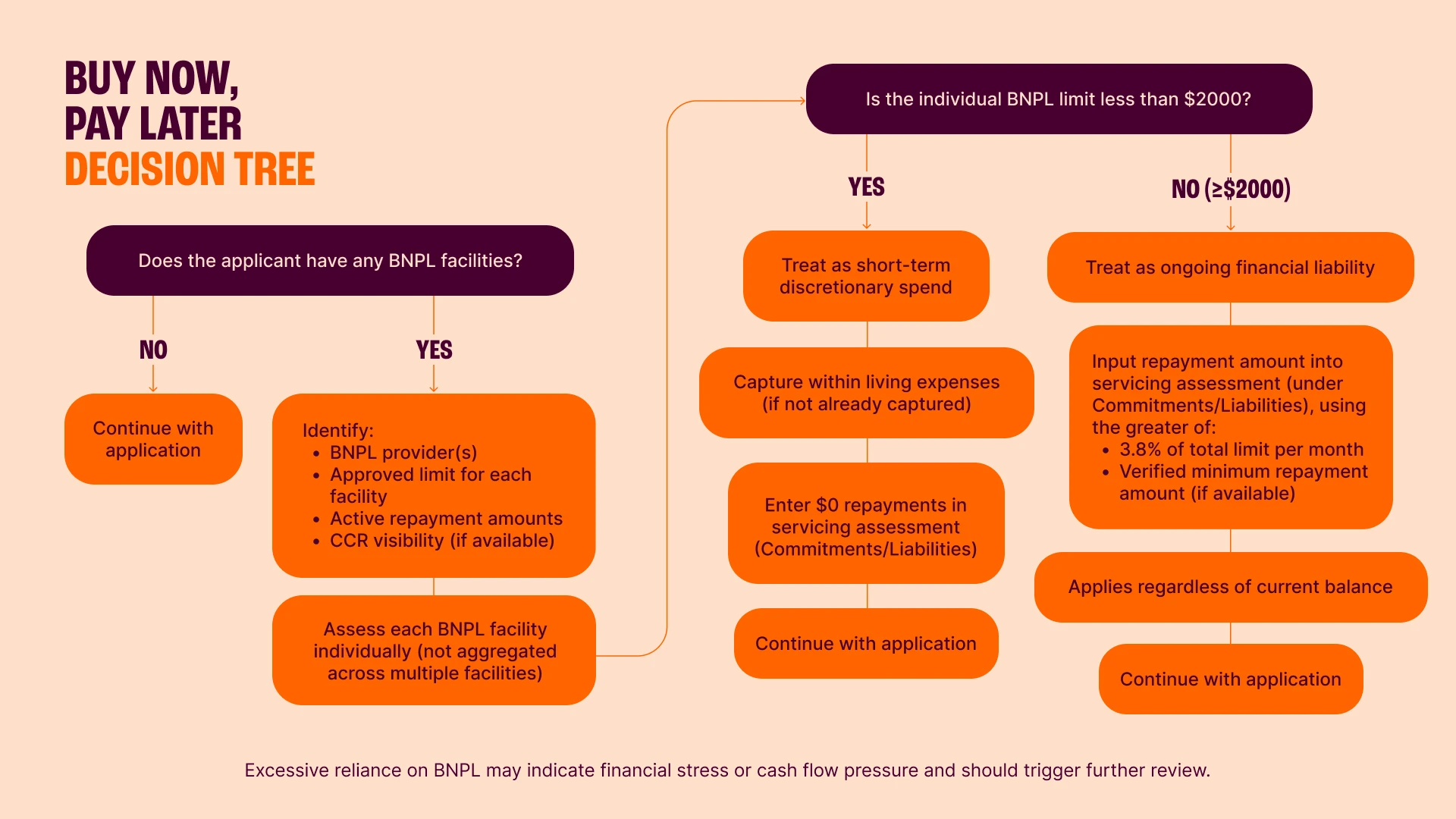
New tool: BNPL decision tree
To make the process easier, we've developed a BNPL decision tree that provides a simple step-by-step guide for:
- Identifying BNPL facilities
- Determining the correct policy treatment
- Calculating servicing commitments
- Recording facilities correctly in the servicing calculator
The decision tree has been designed to take the guesswork out of assessing BNPL and help drive consistency across all applications.
Key takeaway
BNPL facilities might fund yesterday's online shopping purchase, but they can have a real impact on today's lending assessment.
By asking the right questions, accurately capturing BNPL facilities, and applying the correct servicing treatment, we're not only meeting our responsible lending obligations but also helping deliver better outcomes for our customers.